Showing posts with label Research. Show all posts

Monday, 29 July 2024

The Fundamental Focus of Ways 2 Interface

“We watch films with our eyes and ears, but we experience films with our minds and bodies. Films do things to us, but we also do things with them. A film pulls a surprise; we jump. It sets up scenes; we follow them. It plants hints; we remember them. It prompts us to feel emotions”
– David Bordwell, The Viewer’s Share: The Model of Mind in Explaining Film, 2012

The point of Ways of Being: The Spectator and the Spectacle was to open up the relationship the spectator has with the spectacle and show that it is much more nuanced than merely the spectator passively taking in the spectacle.

“we need to understand how the spectator views, absorbs, receives, engages, experiences, constructs, desires, negotiates, manipulates, participates, fantasises, debates, infers, identifies, critiques, addresses, senses, recreates and integrates with the cinematic fiction [spectacle].”
Ways of Being: The Spectator and the Spectacle, 2013:36

This is why in Appendix A of the paper, I started to put together redefinitions of the spectator and the spectacle to better express their complex interactions.

What I came up with was…The spectator redefined as the perceiving participator
The spectacle redefined as the spectacle experiencing situation

But, again, something was missing because the perceiving participator and the spectacle experiencing situation were not providing a fully accurate description because, like the spectator and the spectacle terms, they were treating this combined relationship as being made up of two fundamental separated entities:

“cinematic experience [and all content experience] remain phenomenolgically and philosophically undertheorized, in my view, so long as the events on-screen and the spectator are each considered individually, as isolated entities separate from one another. One needs to enlarge the frame of description and know how to draw – behind the back of the spectator, so to speak – a second screen on which the osmotic exchange between the so-called spectator and the events on the primary screen becomes visible.”
– Christiane Voss, Film Experience and the Formation of Illusion, 2011:139

The truth of the spectator and the spectacle is not the spectator and the spectacle, the truth of the spectator and the spectacle is:

The-spectator-and-the-spectacle (or the-perceiving-participator-and-the-spectacle-experiencing-situation)

They are always a connected unit, the inputs and direct considerations of that unit are always in flux, but the basic unit always remains – it is a fundamental subjective gravity of our cognition.

The fallacy of Ways of Being, in regards to my dissection of the relationship of the spectator and the spectacle, is in the way that I discuss them as being what are fundamentally separate entities and only becoming combined as a result of an external interface – The device that exhibits the spectacle and allows the spectator access to it.

When we talk of the spectator and the spectacle in this separated fashion, we are getting a step ahead of ourselves.

In order to understand the relationship of the spectator and the spectacle, we need to take a step back and examine the nature of the fundamental internal cognitive process that makes the spectator and the spectacle, as separations, a reality.

This process is the internal interface – The cognitive interface inside every human mind.

The interface is what Christiane Voss is talking about when talks about a second screen behind the back of the spectator: “on which the osmotic exchange between the so-called spectator and the events on the primary screen becomes visible.”

The interface is the central focus of Ways 2 Interface because it offers the best means to reconceive of the spectator and the spectacle as fundamentally not being separate entities and to explore the internal workings of that combined entity.

I am not the first to talk about the interface in this way, but since the very recent all-pervasive overload of technological interfaces onto the consumer market there seems to be a growing consideration towards the larger conceptual frameworks the interface can offer us:

“our perceptions constitute a species-specific user interface that guides behavior in a niche. Just as the icons of a PC’s interface hide the complexity of the computer, so our perceptions usefully hide the complexity of the world, and guide adaptive behavior. This interface theory of perception offers a framework, motivated by evolution, to guide research in object categorization. This framework informs a new class of evolutionary games, called interface games, in which pithy perceptions often drive true perceptions to extinction”
– Donald D. Hoffman, The Interface Theory of Perception, 2009:1

Of all the interface considerations, Hoffman’s Interface Theory of Perception offers us the best place or perspective from which to begin a re-conception of the spectator and the spectacle; not only because It gives my own thoughts on the subject a leg to stand on, but because the computer simulation data he has already demonstrated that his theory holds some ground.
“Why all this horsepower in the brain just to look? The idea from Cognitive Neuroscience is that perception, vision is really just a reality engine; in real time you’re creating all the depths, colours, motions, shapes, textures and objects that you see, so you are creating the reality that you experience right now. You’re not just taking a snapshot of a world that was already there.”
– Donald D. Hoffman, 2013.

In presentation below Hoffman outlines his Interface Theory of Perception and how is impacts our conception of consciousness. You can read more of his research here.

“We pay good money for user interfaces because we don’t want to deal with the over-whelming complexity of software and hardware in a PC. A user interface that slavishly reconstructed all the diodes, resistors, voltages and magnetic fields in the computer would probably not be a best seller. The user interface is there to facilitate our interactions with the computer by hiding its causal and structural complexity, and by displaying useful information in a format that is tailored to our species projects, such as painting or writing.”
– Donald D. Hoffman, The Interface Theory of Perception, 2009:11

However, this is not to say that there is not a world external to us, Hoffman’s theory is just saying that we have evolved to see that world according to our species specific interface framework.

The interfacing relationship relationship between the-perceiving-participator-and-the-spectacle-experiencing-situation and the interface framework that would reveal is what the posts on Ways 2 Interface were going to theorize about.

I also planned to use the blog to document related research of other practitioners that I would pull apart and attempt to apply to my own theorizing.

Then, eventually, my plan was to take all the thinking collected on the Ways 2 Interface blog and apply it to a full-fledge research project as part of a fully accredited master’s degree.

My thinking was to build on the non-empirical research of Ways of Being and Ways 2 Interface by conducting first hand empirical research in an attempt to prove my theories on the interface.

I was very keen to take my media-centric research and explore it more broadly through the fields of cognitive psychology and neuroscience.

But I ultimately elected to pursue the equally difficult task of building my own master’s degree from scratch.

However, my thinking and theorizing regarding the the interface can be discerned in the first set of blog posts I wrote for the Ways 2 Interface blog, some of which were unfinished and have only recently been posted.

Just note, I haven't bothered to polish the unfinished posts, they have just been posted up in their original unfinished and unproofread forms...






Sunday, 21 July 2024

Welcome to Ways 2 Interface: My Credentials and Reasoning for Orchestrating this Project

The following is an unfinished post that would have been one of the introduction posts for the Ways 2 Interface blog.

What I have now posted up is all that I wrote for the original post which would most likely have been much longer...
  1. It interests me. The single most important reason for why you should do something. 
  2. It REALLY interests me! This research is something I have been doing since October 2012, it has become an obsession.
  3. It demonstrates that I can go the distance, I have been running this marathon since October 2012. While this project is an exploration of an interest, it is also testimony of my overall abilities.
  4. The topics this project deals with are crying out for new-thinkers. I think I have one or two things to say.
  5. It provides me with a space and a focus around which I can exercise my intellectual capabilities even more so.
  6. It keeps writing and as I discovered while writing Ways of Being, once I start writing about this topic I can not stop. Writing is something that I have only very recently got the full hang of. I could not read of write properly until I was 14 and I have been playing catch-up ever since. I have been blogging it up until now.
  7. I have been writing content for this site since October, 2013 I have now amassed a back catalogue of around 30,000 words that I have spread across various different posts. These I will we posting up over the next few days and weeks ,while I write up some more material.
  8. It builds my brand. 
  9. How did the project come about? Simple. Unfinished business! 

My Research Interests Page

The following is the research page that was originally accessed via the link tab under the Ways 2 Interface blog banner.

The research page outlined my wider research interests in relation to the focus of the Ways 2 Interface research project. 

All the listed research interests ended up becoming study focuses in MTA Portfolio which can be found at: ibuiltmyown.education.


 My Research: Living Outside of the Box 

This section was copy and pasted from a blog post I wrote quite some time back just to stretch my muscles and to get my head in order. However, this post is only standing in for the more concise overview of my research focus that I will eventually post here instead. 

This is a little outdated, but still largely relevant...

It will take too long to outline the full breadth of my research concerns, but they can essentially and briefly be grouped under two primary banners, which are essentially concerned with (1) life and (2) work; while they are presented as separate here, as I have already said, for me, they are the same thing. 

The different areas of my research do criss-cross quite frequently and this cross-crossing tendency is very revealing of my philosophy; it shows up quite frequently in my work, as it has done in this blog post. 

Essentially, it is an 'all for one and one for all' approach and it really does produce results! This approach is how I was able to attain some of the highest marks and commendations my university has ever awarded for my BA (Hons) in Creative Writing with Film and Screen Studies.

Ultimately, this is why I refer to my research as being a research web, because a single research topic of that web never finds itself isolated; when I am researching one specific area, I am gaining knowledge that is prevalent to several other areas - it is my very own personal and collaborative network of research.


(1) Lifestyle design and self-improvement

"Gold is getting old. The New Rich (NR) are those who abandon the deferred-life plan and create luxury lifestyles in the present using the currency of the New Rich: time and mobility. This is an art and a science we will refer to as Lifestyle Design (LD)
- Tim Ferriss, The 4-Hour Work Week, 2007:7

"the search for success and happiness depends less on tying oneself down to another than on opening up the world of possibilities so that one can always pursue the best option. Freedom. Flexibility. Personal choice. 
- Eric Klinberg, Going Solo, 2012:12-13


Most jobs and established lifestyle patterns prevent you from living a fulfilling life in the long run. In fact, most jobs and established lifestyle patterns are killing people - most people are overworked, under-motivated and suffering from a range of health problems produced from these ailments.


Lifestyles today are increasingly bogged down with emotional and physical clutter.

We live in an age and a consumerist culture that very much encourages you to load your life up with stuff: eat this, buy that, own the good life, have perfection!

It's bullshit! It is absolute bullshit.


Most of that shiny stuff is just baggage, that you do not even need to live a fulfilling and productive life, and, ultimately, it will just sap your financial resources. Stuff is just clutter and it will distract you from fulfilling your fundamental focus/your passion/your dream.

Realise it for the distraction that it actually is, invest in only what you essentially need and your dream will positively prosper. I promise you.

This first area of my research has been concerned with de-cluttering my life of physical and emotional baggage; in addition to providing me with the necessary tools to enable me to re-build my life and my mindset, on my own terms, from the ground up.


Creativity

I research by doing! 

  • Filmmaking
  • Writing
  • Daydreaming
  • Dreaming
  • Photography
  • Fridge magnets
  • Sketching
  • Doodling
  • Lego with the nephew
  • Editing (I LOVE editing). 
  • I have just started learning to code. 

You name it, I make it.

Creativity is one of the single most important cognitive exercises you can do on a daily basis, because it reminds your brain that it is still alive. 

Creative practise also encourages your brain to think innovatively and you never know what startling results it will produce as a result, those results might just allow you to live the life you want to live.


Mindfulness, Meditation, Memory Training and Memory Palaces


Mindfulness:

"Mindfulness expert Jon Kabat-Zinn has described mindfulness as paying attention to the present moment with intention, while letting go of judgment, as if our life depends on it. The present is the only real moment we have. And, in fact, our life may actually depend on it. Among its many benefits, mindfulness meditation has actually been proven to increase telomerase, the ‘caps’ at the end of our genes, which, in turn, can reduce cell damage and lengthen our lives. In addition, research demonstrates that mindfulness bolsters our immune system, making us better able to fight off diseases, from the flu to cancer. Mindfulness helps improve our concentration and reduce ruminative thinking that contributes to the high levels of stress that is so prevalent in our society. Stress and ruminative thinking are not only mental health hazards, but they are, quite often, the very symptoms that lead people to seek out the help of a therapist." 


Meditation:

"Maybe meditation isn't so mysterious after all. Neuroscientists have found that meditators shift their brain activity to different areas of the cortex - brain waves in the stress-prone right frontal cortex move to the calmer left frontal cortex. This mental shift decreases the negative effects of stress, mild depression and anxiety. There is also less activity in the amygdala, where the brain processes fear." 


Memory training:

"A trained memory was not just a handy tool, but a fundamental facet of any worldly mind. What's more, memory training was considered a form of character building, a way of developing the cardinal virtue of prudence and, by extension, ethics. Only through memorizing, the thinking went, could ideas truly be incorporated into one's psyche and thier values absorbed. The techniques existed not just to memorize useless information like decks of playing cards, but also to etch into the brain foundational texts and ideas."
- Joshua Foer, Moonwalking with Einstein, 2011:10


Memory palace:

"The idea is to create a space in the mind's eye, a place that you know well and can easily visualise, and then populate that imagined place with images representing whatever you want to remember. Known as the 'method of loci' by the Romans, such a building would later come to be called a 'memory palace'"
- Joshua Foer, Moonwalking with Einstein, 2011:96


Your mind is your realm. 


If you don't get in there and start taking charge of it, your mind will be programmed by whatever messages (sight, sound, smell, touch and taste) or patterns of behaviour it gets bombarded with in the real world. You will get stuck in the flow of the things you are bombarded with and you will become a slave (zombie) of circumstance. 


"Sam Sommers, associate Professor of Psychology at Tufts University and writer of the book “Situation Matters”, believes that the power of context is often underestimated. He says that where we are, who we are with and also what’s happening in our life matters and determines who we are... 
You all know the following type of people: they are full of negativity and they see life through a pair of broken glasses – it all looks fairly messed up. Let’s call these people energy vampires as they steal our energy and leave us feeling drained. 
The people we spend a lot of time with have a big impact on us because we subconsciously imitate others around us. I read that “some evolutionary psychologists believe that automatic imitation may act as “social glue” – helping people to empathise and connect with each other”. So without knowing we mimic the people around us! Of course just because you are around pessimistic people, doesn’t make you a pessimist per se – but certainly these people don’t make you feel energized, passionate, enthusiastic or happy." 
Maxine Schiffmann, How our surrounding influences us and what we can learn from it

Seriously, don't go there and if you are already there - get out! 

Always be aware of the contexts and surroundings you place yourself in, are they really benefiting you and your aims?

Take charge of your mind, so that you can take charge of your life and never, ever underestimate the power of your mind! 

Build a mindset for success - habits!

Good places to start:


        • Google it...


        Health, Nutrition and Fitness

        This one is no-brainer and very good for your brain.

        Increase your overall functioning, well-being and lifespan.

        Some of the things I have learnt:

        • Keeping physically active, keeps you physically alive, disciplined and feeling great! 


        • Running - I have found it to be its own form of meditation and, of course, it has its other health benefits.


        • General workouts (with or without weights) - short bursts of high intensity work best. Keeps you streamlined, general health benefits, wakes you up and is a good way to kill time (waiting for the bathroom, dinner or computer to load). 

        • 5:2 fasting diet - been on it for nearly 2 years and the benefits are astounding (I am currently participating in an investigation into the diet the University of Bristol is conducting). Since undertaking the eating pattern I have experienced vastly increased energy and cognitive functioning. AND I am no longer a TOFI (thin on the outside, fat on the inside); in fact, I have an easily maintained athletic build now - NICE! Definitely worth a look. The diet, not just me. 


        • Water - drink it! And keep drinking it! 


        Psychology (myself and other people)

        It's all about honing your personal intelligence.

        I have always been interested in psychology and I have been reading up on it since about 2006. We have to deal with other people in our day-to-day lives, so you might as well get good at doing it.

        Another important point that often stops people from achieving their goals - what other people think of them. 

        Do not worry about what other people think about you. No one cares. Seriously. We all do it. People always, always worry about what other people think of them and, because of this, ask yourself this - when are the people around me actually sparing a moment to think about to think about me? 

        If everyone is constantly worrying about what others think of them, when are they actually thinking about you?

        They're not, they're thinking about themselves and their own state of self-preservation, so stop worry about it. It's a waste of mental assertion, assertion that is much better spent at achieving your life goals. 

        Finally, If you want to be successful in anything, it is also vitally important to gain an ideal balance of arrogance and humility - be the most open minded, narrow-minded person you can be

        To this end, you won't become disconnected from opportunities because of your own self-importance and you won't get lost in the bigger picture of opportunities available to you.

        Be open minded to the world and people around you, but know when it is time to narrow your focus and handle business.

        Happenstance - stop and think - evaluate the situation - then take the appropriate action to produce the most positive and productive result for all involved. 
        An automatic mindset everyone should nurture - habit!

        Good places to start:


        • Smart Thinking - this is my favourite section of Waterstones and the one where I source most of my reading material from; this one is heavily concerned with psychology and many other things besides. Take a note of the books that interest you and then buy them of Amazon or the Book Depository - much cheaper. I would happily classify myself under the Smart Thinking section. 

        • People. Real flesh and blood people help with this one - listen, watch and interact with them.


        Emotional Intelligence

        Psychology again, but this one is more focused on controlling the emotions of yourself and of other people. 

        It's about handling the situation.


        "The Four Branches of Emotional Intelligence

        Salovey and Mayer proposed a model that identified four different factors of emotional intelligence: the perception of emotion, the ability reason using emotions, the ability to understand emotion and the ability to manage emotions.
        1) Perceiving Emotions: The first step in understanding emotions is to accurately perceive them. In many cases, this might involve understanding nonverbal signals such as body language and facial expressions. 
        2) Reasoning With Emotions: The next step involves using emotions to promote thinking and cognitive activity. Emotions help prioritize what we pay attention and react to; we respond emotionally to things that garner our attention.
        3) Understanding Emotions: The emotions that we perceive can carry a wide variety of meanings. If someone is expressing angry emotions, the observer must interpret the cause of their anger and what it might mean. For example, if your boss is acting angry, it might mean that he is dissatisfied with your work; or it could be because he got a speeding ticket on his way to work that morning or that he's been fighting with his wife.
        4) Managing Emotions: The ability to manage emotions effectively is a key part of emotional intelligence. Regulating emotions, responding appropriately and responding to the emotions of others are all important aspect of emotional management."


        Critical Thinking and Philosophy

        Critical thinking is a vital cognitive tool: it teaches you to be highly selective; as well as how to assess a  situation and/or problem and/or point of view(s) fairly and objectively. 

        It's also a good tool to identify and dispense with time-wasters, while giving them a bit of constructive criticism. 

        Philosophy, assists with this, but, in particular, it encourages you to think about the bigger picture and you should always, ALWAYS challenge your mind to think bigger and better.

        • The entirety of my First Class Creative Writing with Film and Screen Studies degree and my award-winning theoretical dissertation, Ways of Being: The Spectator and the Spectacle, formidably nurtured my critical thinking temperament.


              • You can get a bit more hardcore and read the original philosophers and their texts, if you want to bore yourself to death! The modern day summations provided by contemporary philosophers are much more enjoyable, easy to digest and cover a broader range of philosophical issues.

              •  Most smart thinking books delve into these areas. The clue's in the name.


              Basic survival 

              Seriously, you never know when things are going to go tits-up. I am pretty slack with this one, but:


                • I have just completed a First Aid course.


                Basically, if you look after your body and your mind, then your greatness, your passion and your ideal lifestyle will positively prosper!


                (2) Ways 2 Interface and self-sufficiency


                "We are the stories we tell ourselves, the key to understanding the purpose of the interfacing process is in realising both the deceits of the abstractions in which we constantly immerse ourselves and the ways in which we constantly immerse ourselves in the truths of those abstract deceits." 

                "Life doesn't have to be so damn hard. It really doesn't. Most people, my past self included, have spent too much time convincing themselves that life has to be hard, a resignation to 9-5 drudgery in exchange for (sometimes) relaxing weekends and the occasional keep-it-short-or-get-fired vacation."

                - Tim Ferriss, The 4-Hour Work Week, 2007:7

                "Gone are the days of institutions that provide steady employment and guaranteed retirement. I personally lost everything in the 2008 collapse of the banking industry. But I have many friends who spent 30 years as employees in that field and also went through great hardship. I was able to rebuild by taking advantage of opportunity" 


                I will not spend too much time outlining Ways 2 Interface, as it does already have quite a thorough explanation on its website. Ultimately, it should be seen as the next phase of the research project I initiated in my highly praised practical and award-winning theoretical dissertations of my BA (Hons) degree. 

                It is a very experimental venture that I will be heavily developing in my upcoming MSc in Creative Technologies and Enterprise.

                "From the bison sketched on the cave wall to the latest meme posted on the facebook wall, the interface of the spectator and the spectacle, a physical and cognitive intermingling of consumer and content, is an integral identity and reality constituting process, that quite literally tells the story of our universal and underlying ways of being...
                By examining the habits and manifestations of our cognitive, corporeal, cultural and connected ways to interface, Ways 2 Interface will aim to build a unified understanding of this interfacing process - the brand at the heart of all our stories."
                Ways 2 Interface: Welcome #2Interface, 2014

                Stories, narrative, fables, legends, branding, etc., the power of stories and the potential of stories are very much at the heart of what I do and who I am - my fundamental focus, my philosophy!

                What is my fundamental focus? I'll give you a clue...
                When I completed my final year, the research was very much unfinished business and I knew that it would be in my interests to keep exploring those research fields, because they are absolutely concerned with my fundamental focus. Always invest in defining and nurturing your passion, because then you will be in a position to produce something great from it! 

                I have already written quite a bit of material for the project, over 50,000 words, which I am now in the process or re-writing, as a result of taking my Writing for the Web MOOC. However, the first wave of posts should be all up by the time I begin my Masters; in addition to further defining and populating the content of this blog.

                ... it has something #2dowithfilm.
                This blog and Ways 2 Interface will very much compliment each other; on this blog I will tell my story and explore my relationship to narratives (in all their shapes and forms) and on Ways 2 Interface, I will use this blog material, in addition to other non-subjective material, to illustrate the larger story-centric neurological, psychological and cultural concerns of my research project. 

                Ultimately, this second banner of my research is about defining and refining my own branded speciality based around my fundamental focus; that will, in turn, enable me to build my own self-sufficient infrastructure to maintain and manifest my ideal lifestyle.

                This blog and Ways 2 Interface are going to play a huge role in that endeavour, whatever it ends up being - I research to explore and I explore through doing. Make every facet of your fundamental focus work for everything else in order to increase the strength of each element and the effectiveness of your passion as a whole - all for one and one for all.

                Beyond changing viewing habits, spectators, spectacles, stories, neuroscience, interfaces and cavemen, etc., my self-sufficiency research has been looking into:


                • Digital content creation - blogging, copywriting, social media, social media marketing, podcasting, videography, photography, creative computing, etc. 

                  • Digital Storytelling and the future of storytelling - filmmaking, documentary filmmaking, interactive documentaries, story apps, web series (independent and non-independent), transmedia, virtual reality.

                    • Branding - its about telling and selling a story (Ways 2 Interface + this blog + me).


                    • Success - Due to the success I experienced in my BA (Hons), which surprised even me, increasingly, I have been looking into the science and process behind 'success'. 
                    • I have been conducting this research to ascertain how I managed to employ this process for my degree and how I can further deploy and refine it for future successes. 
                    • In addition to reading quite a bit of literature on this topic, I have been examining entrepreneurs, athletes, thought leaders, politicians, celebrities, etc., in an endeavour to uncover the habits, the mindsets and the principles that produce their greatness. 
                    • I have made quite a bit of headway with this topic; so much so; that I am currently writing an explanation (that is fast becoming book length) of how I employed it and how others can do likewise. Keep your eyes peeled for I RUN NO MORE: Realise Your Focus, Embrace Your Fear, Claim Your Time and Achieve Your Greatness! 

                      • Start-ups - logistics, innovation, culture and purpose.

                        • Entrepreneurism - that's the dream.

                          • The New Rich - The 4-Hour Work Week - a variation of this, that's the ultimate dream. If we were meant to get stuck in unfulfilling careers and gruelling lifestyles, then the human race would never have left the cave! I promise you, if they could see how their descendants are stumbling today, they would go right back to their cave wall and dream bigger, much bigger.

                            • Marketing - online and offline. Absolutely necessary for building and propagating your brand around its appropriate niche audience. A handy way to make money and tell a story as well.

                              • Leadership and management/project management -  If you can manage other people in a productive, positive and inspiring manner (which is essential for any type of venture or project), then taking control of your own life will be a walk in the park.


                                • Negotiation and conflict resolution - more management and emotional intelligence. Really, this is a skill and temperament everyone should acquire.

                                  • Legality - shoot me!

                                    • Freelancing - it's got to be done.

                                      • Outsourcing - this falls into entrepreneurism, freelancing and start-ups. A highly useful tool and industry sector. This is something everyone REALLY needs to get their heads around, considering how quickly the outsourcing sector has grown and continues to grow - it is the future of work, period! 
                                      • I have been identifying areas in my knowledge where I can outsource work, opposed to doing it myself; in addition to looking into outsourcing areas where I can exploit my own skills for financial, experiential and testimonial gain.

                                        • Finance - personal, economics, the banking system, student loans, venture capital, investing, cryptocurrencies (bitcoin), freeconomics, passive income, crowdfunding (I am big on crowdfunding - huge untapped potential here). 
                                        • Money is worthless if you do not know how to handle it and you will be a slave to it, if you do not see it for the tool that it actually is, it is not God!

                                        • Crowdfunding - forget traditional means of gaining venture or project capital, if there is something you want to get off the ground, put together a crowdfunding campaign, market it to its the primary niche target audience and gain a following through the course of doing so. 
                                        • I have been keeping a very close eye on this one since July, 2013; I even assisted the I AM THE PRIZE campaign in achieving their goal, based on the research I had conducted. I am currently in the process of building my own crowdfunding campaign...

                                          • Self-publishing - digital and print - I do write a lot now and a little extra money would not go a miss, it's good for building your brand as well. This is something I am currently writing to exploit.


                                              • Online film distribution and video on demand - these streets are lined with gold! Seriously, filmmakers, this is where you are going to make your living, get accustomed to exploiting it.

                                                • Real world film distribution - it's not dead and it is still highly lucrative when a very creative, immersive and pervasive approach is realised. In accordance with the above online film distribution and video on demand, filmmakers, this is where you are going to make your living.

                                                  • Film festivalspublic film exhibitionpop-up cinemas and immersive cinema. I have mixed feelings about film festivals, I am not big on film snobbery, I am not big on any kind of snobbery! I am very interested in public exhibition and cinema, especially when it is immersive and innovative, see Ways of Being: The Spectator and the Spectacle


                                                    • Academia - the larger workings of academia and the reformulations it is currently experiencing is something that I started to look into due to some of its shortcomings I experienced while undertaking my BA (Hons). It's not all bad, but could still be a lot better, it certainly needs to encourage self-sufficient proactive tendencies in students. 
                                                    • When I was awarded my high marks for my BA (Hons), many people assumed that I was going to on to become a fully-fledged academic. I have no ambitions of becoming solely an academic, I even took some convincing to undertake my Masters, but there are major advantages of nurturing an academic temperament in my overall skillset.


                                                    • E-Learning and MOOCs (Massive Open Online Courses) -  In addition to undertaking quite a few MOOCs (they are great for getting overviews of subjects), I have been examining the different types/platforms/shortcomings/untapped areas they offer, there is potential here for educators, academics, brand builders, thought leaders, students, content creators and technologists, etc.


                                                    • Travelling - logistics and the knowledge required to build a self-sustaining infrastructure to enable me to interweave travelling with my other pursuits. Saving up and then going off is fine... until you run out of money. 
                                                    • I am figuring out my own way of generating income, while travelling. It is possible, because I have been examining other people who have mastered it quite successfully. I have always wanted to travel and I can not go to another planet (someone prove me wrong), so I might as well make the most of this one.


                                                      • Solo living and modern lifestyles (life and work) - 50% of Americans are single, 50%! And most are either living on their own or would like to. Other countries, including the UK, are showing signs of the same trend. This is a major changing social and existential trend, that is only just being looked into. It's a type of professional and personal lifestyle that is going to require a whole new cultural mindset and infrastructure of support. 

                                                      Friday, 14 November 2014

                                                      Ways #2Learn: expanding my focus by expanding this blog's focus


                                                      I am finding that my creative entrepreneurial practice and self-directed postgraduate study is proving to be vastly more beneficial and fulfilling than a pre-arranged master's degree. Therefore, for the time being, I am staying off the conventional path, while I continue to explore the wilderness.

                                                      When I first started this blog and its research focus I described it as being something new and fantastic.

                                                      But is it actually something new and fantastic?

                                                      I don't know.

                                                      But from my point of view it is, because this overall project-and-blog-thing is very much tied up with my larger personal development aims, so naturally I have a great deal of enthusiasm invested in the overall focus of Ways 2 Interface.

                                                      Recently, mainly due to various pieces of equipment failing me, my childhood interest in electronics has been revived. More on this later...


                                                      This blog started its life as a research focus extension of the concerns of my First Class BA (Hons) in Creative Writing with Film and Screen Studies and, in particular, the focuses of my two final year dissertations: EYES (practical dissertation) and Ways of Being: The Spectator and the Spectacle (award-winning theoretical dissertation). 

                                                      Hence, the name of this blog: Ways 2 Interface a.k.a. Round 2.

                                                      Welcome #2Interface - my original intention for this blog (you don't have to read it).

                                                      However, the initial focus of just presenting my extended research and considerations never felt quite right - it always felt incomplete. After essentially writing another dissertation spread across the first four posts of this blog, I decided to reassess its situation and where exactly I stood in regards to my academic interests.

                                                      Why #2Interface: expanding my focus + focusing my interests = mastering the enterprising researcher - my reassessment of this blog and its focus (again, you do not need to read this).

                                                      Ultimately, this project was always building towards a master's degree in Creative Technologies and Enterprise that I was very interested in undertaking (there is still a huge maybe hanging over this) and, when I reassessed the situation in regards to my postgraduate education, it occurred to me what was really missing from this blog - MOOCs!

                                                      The many different MOOCs (Massive Open Online Courses) I had undertaken throughout the later of 2013 and the full breadth of 2014. 


                                                      MOOC-tastic - a pinterest board collecting together the many MOOCs I have and I am enrolled upon.

                                                      From the many different disciplines of the MOOCs I have studied, it is clear to see that I have a hybrid focus that extends far beyond the creative writing and film focus of my BA (Hons).

                                                      Basically - my MOOCs, the vast swathes of time they have eaten up and the reflections they have nurtured me to produce on various different aspects of my overall education and creative application - are very much an expression of my expanded hybrid focus.


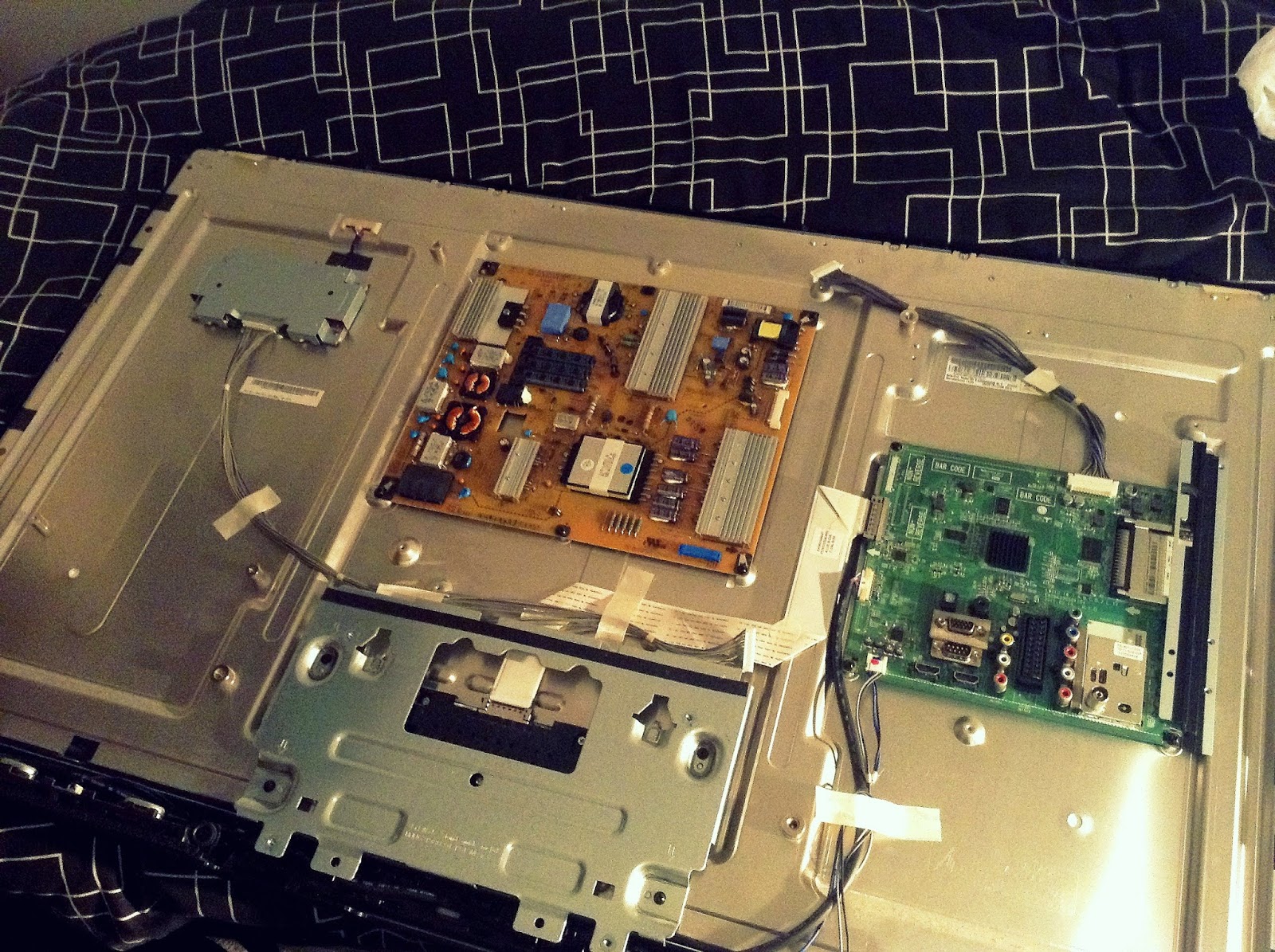
                                                      I had to replace some of the components in my computer monitor and I also used the previous power board (top center) to generate a new background for this blog.


                                                      Additionally, I am finding that my creative entrepreneurial practice and self-directed postgraduate study is proving to be vastly more beneficial and fulfilling than a pre-arranged masters degree. Therefore, for the time being, I am staying off the conventional path, while I continue to explore the wilderness.

                                                      Finally, why in sanity's name was I not talking about all of this and refining my focus even more so on this perfectly suited blog!

                                                      So I am now.

                                                      Welcome #2interface.

                                                      Ways #2Learn: expanding my focus by expanding this blog's focus


                                                      I am finding that my creative entrepreneurial focused practice and self-directed postgraduate study is proving to be vastly more beneficial and fulfilling than a pre-arranged masters degree. Therefore, for the time being, I am staying off the conventional path, while I continue to explore the wilderness.

                                                      When I first started this blog and its research focus I described it as being something new and fantastic.

                                                      But is it actually something new and fantastic?

                                                      I don't know.

                                                      But from my point of view it is, because this overall project-and-blog-thing is very much tied up with my larger personal development aims, so naturally I have a great deal of enthusiasm invested in the overall focus of Ways 2 Interface.

                                                      Recently, mainly due to various pieces of equipment failing me, my childhood interest in electronics has been revived. More on this later...


                                                      This blog started its life as a research focus extension of the concerns of my First Class BA (Hons) in Creative Writing with Film and Screen Studies and, in particular, the focuses of my two final year dissertations: EYES (practical dissertation) and Ways of Being: The Spectator and the Spectacle (award-winning theoretical dissertation). 

                                                      Hence, the name of this blog: Ways 2 Interface a.k.a. Round 2.

                                                      Welcome #2Interface - my original intention for this blog (you don't have to read it).

                                                      However, the initial focus of just presenting my extended research and considerations never felt quite right - it always felt incomplete. After essentially writing another dissertation spread across the first four posts of this blog, I decided to reassess its situation and where exactly I stood in regards to my academic interests.

                                                      Why #2Interface: expanding my focus + focusing my interests = mastering the enterprising researcher - my reassessment of this blog and its focus (again, you do not need to read this).

                                                      Ultimately, this project was always building towards a masters degree in Creative Technologies and Enterprise that I was very interested in undertaking (there is still a huge maybe hanging over this) and, when I reassessed the situation in regards to my postgraduate education, it occurred to me what was really missing from this blog - MOOCs!

                                                      The many different MOOCs (Massive Open Online Courses) I had undertaken throughout the later of 2013 and the full breadth of 2014. 


                                                      MOOC-tastic - a pinterest board collecting together the many MOOCs I have and I am enrolled upon.

                                                      From the many different disciplines of the MOOCs I have studied, it is clear to see that I have a hybrid focus that extends far beyond the creative writing and film focus of my BA (Hons).

                                                      Basically - my MOOCs, the vast swathes of time they have eaten up and the reflections they have nurtured me to produce on various different aspects of my overall education and creative application - are very much an expression of my expanded hybrid focus.


                                                      I had to replace some of the components in my computer monitor and I also used the previous power board (top center) to generate a new background for this blog.


                                                      Additionally, I am finding that my creative entrepreneurial focused practice and self-directed postgraduate study is proving to be vastly more beneficial and fulfilling than a pre-arranged masters degree. Therefore, for the time being, I am staying off the conventional path, while I continue to explore the wilderness.

                                                      Finally, why in sanity's name was I not talking about all of this and refining my focus even more so on this perfectly suited blog!

                                                      So I am now.

                                                      Welcome #2interface.